Uncategorized, Book Releases, News
New Article by Professor Kate Brown – My Garden Used to be a Brownfield
Dec 2, 2025
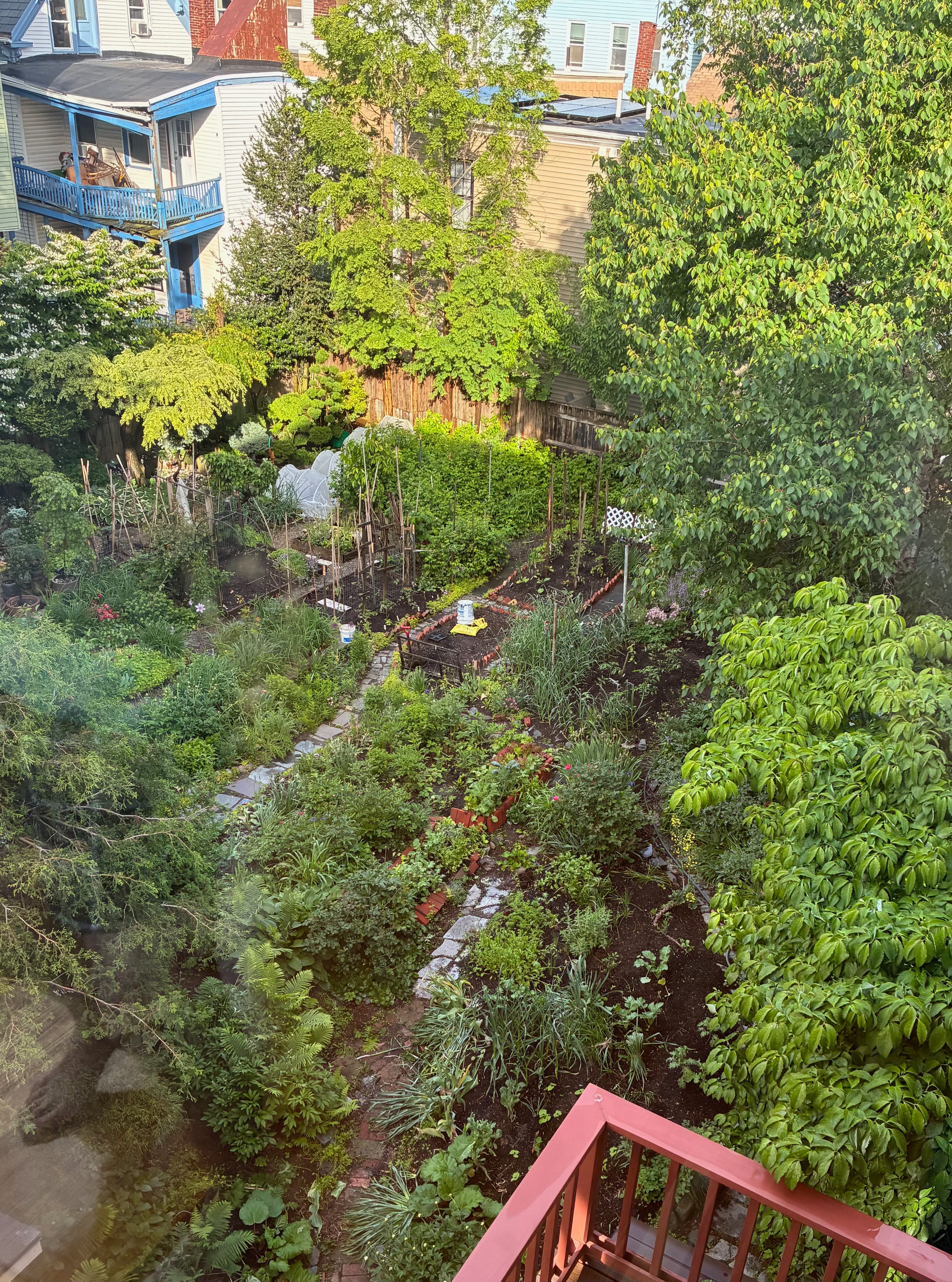
Professor Brown has published an article on Substack about how her neighbors transformed the toxic dump behind their building into a blooming garden.
“I live in a crowded part of Cambridge, Massachusetts. Density is 68,000 people per square mile, compared to a citywide average of 16,500. That is a way of saying in numbers that space in my neighborhood is tight. Most lots have no yards. Instead, they have a building on the front of the lot and another on the back lot. Apartment buildings stand right on the sidewalk, packed shoulder to shoulder.
But our lot is different. Behind our building and that of the neighbors next door is a secret garden, a quarter acre of green space barely visible from the street. It is a marvel of trees, birds, flowers, vegetables and even fish in a little pond. Around it, the city hums and wails, but in the garden, you forget all that.
Until the 1980s, the back lot held a large barn, stalls, and a parking lot, surrounded by a concrete wall. The family that owned the property for much of the twentieth century sold ice and coal, using the barn to store the coal and ice.
The working families who lived in the neighborhood shifted over the decades from speaking Yiddish to conversing in Portuguese, as migrants arrived from Portugal, the Cape Verde Islands and, more recently, Brazil. Other migrants came too, drawn in the seventies to Cambridge’s counter-culture. My neighbors fell in that category. Two of them were carpenters who eventually started a building cooperative. Everyone who worked in the cooperative, from the contractor to the apprentices, shared equally in the profits.”
You can access the full article here: https://katebrownhistorian.substack.com/p/my-garden-used-to-be-a-brownfield