The primary activity of the STS program is research, which takes many forms: individual faculty members pursuing intellectual inquiry, teaching in our graduate program, organizing and hosting conferences, colloquia, and other types of publications.
In From Voice to Influence, Danielle Allen and Jennifer Light bring together a stellar group of political and social theorists, social scientists, and media analysts to explore the transformation of political action in a digital age.
In Transient Workspaces, Clapperton Mavhunga views technology in Africa from an African perspective. Technology in his account is not something always brought in from outside, but is also something that ordinary people understand, make, and practice through their everyday innovations.
The Triumph of Human Empire explores the overarching historical event of our time: the rise and triumph of human empire, the apotheosis of the modern ambition to increase knowledge and power in order to achieve world domination, which Williams explores through the lives and works of three writers: Jules Verne, William Morris, and Robert Louis Stevenson.
The twentieth century was one of astonishing change in science, especially as pursued in the United States. Science and the American Century offers some of the most significant contributions to the study of the history of science, technology, and medicine during the twentiety century, all drawn from the pages of the journal Isis.
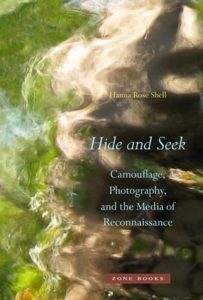
In Hide and Seek, Hanna Rose Shell traces the evolution of camouflage as it developed in counterpoint to technological advances in photography, innovations in warfare, and as-yet-unsolved mysteries of natural history.
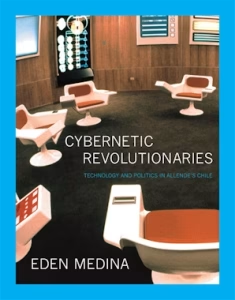
A bold project for change unfolded in Latin America at the beginning of the 1970s. After an electoral victory in Chile, the socialist government led by Salvador Allende and his governing…
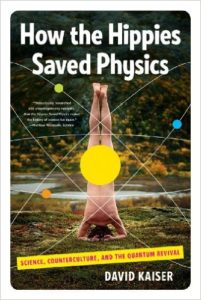
In the 1970s, an eccentric group of physicists in Berkeley, California, banded together to explore the wilder side of science. Dubbing themselves the “Fundamental Fysiks Group,” they pursued an audacious, speculative approach to physics, studying quantum entanglement in terms of Eastern mysticism and psychic mind reading.
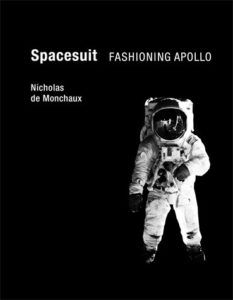
How the twenty-one-layer Apollo spacesuit, made by Playtex, was a triumph of intimacy over engineering.
When Neil Armstrong and Buzz Aldrin stepped onto the lunar surface in July of 1969, they…